 sonar
sonarApp Store Optimization Insights
Data-driven research, practical guides, and strategies for ranking higher on the App Store and Google Play.
App Revenue Estimates: How They Work (and Fail)
App revenue estimates can miss actual numbers by 2×+. Learn how tools calculate them, how to check an app's revenue estimate, and when to trust it.

App Icon Design: What Actually Gets Tapped
App icon design decides whether users tap or scroll past your listing. Data-backed rules for designing icons that convert at 60px in App Store search.
App Monetization Strategy: 4 Models Compared
Subscription, IAP, ads, or paid? Compare every app monetization strategy with real revenue data, conversion benchmarks, and ASO implications for 2026.
App Onboarding That Protects Day-1 Retention
App onboarding decides whether new users stay or churn. Learn the screens, flows, and data-backed patterns that protect Day-1 retention and downstream revenue.
Mobile App Analytics: The Indie Dev Stack
Build your mobile app analytics stack from scratch — what App Store Connect and Play Console give free, which SDK to pick, and the 6 events that matter.
App Release Notes That Do Real ASO Work
App release notes are an indexed, conversion-bearing surface most developers ignore. Learn what Apple and Google index, plus templates and cadence tips.
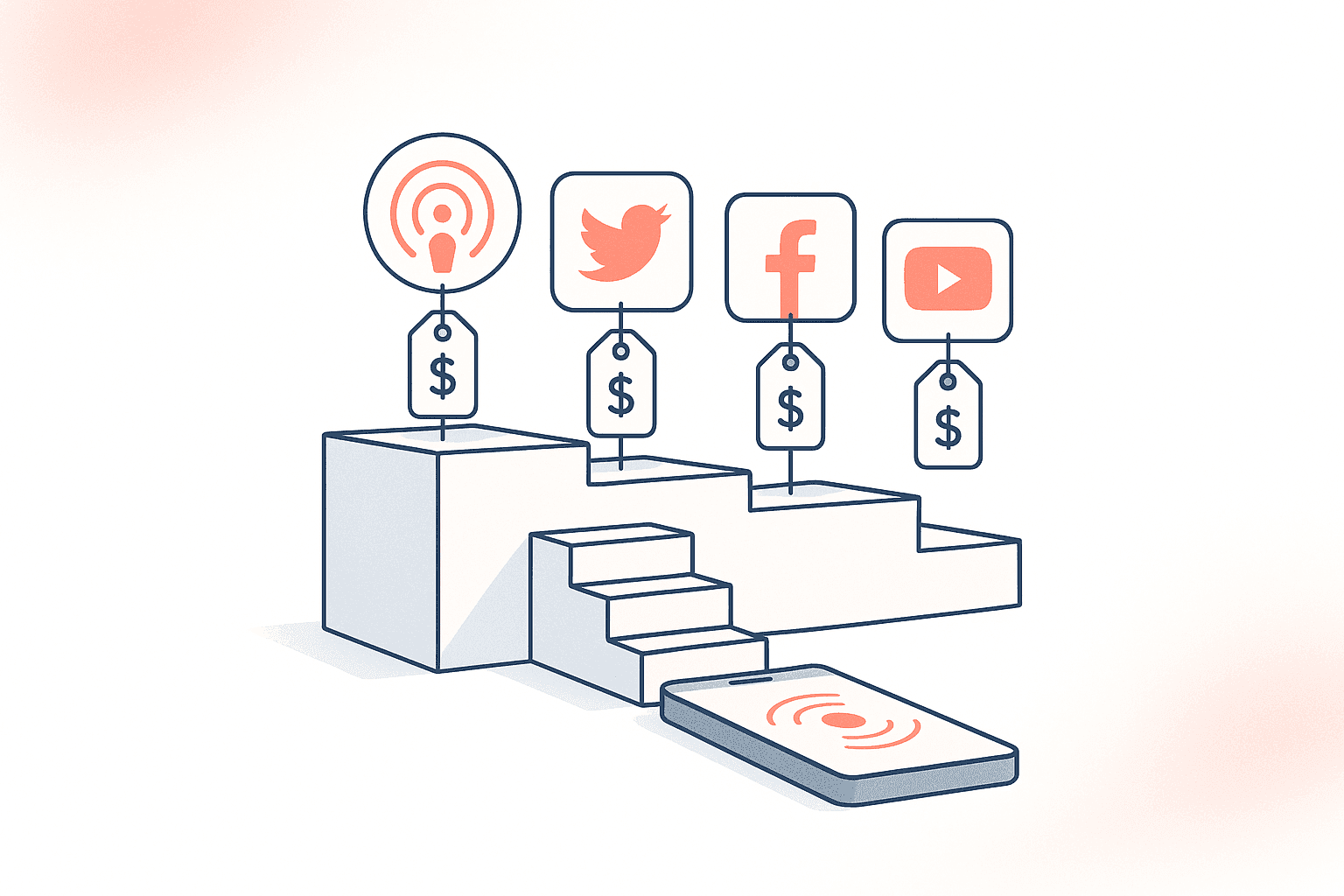
Mobile App Promotion: Channels Ranked by CPI
Honest mobile app promotion channel ranking for indie developers — ASO, Search Ads, creators, communities, and PR rated by realistic cost per install.
Mobile App Landing Page That Converts
Your mobile app landing page pre-qualifies users before they hit the store. Learn copy strategy, smart banners, deferred deep links, and ASO alignment.
User Acquisition Cost: What CAC Includes
User acquisition cost goes beyond ad spend divided by installs. Learn what CAC actually includes, how blended vs paid metrics differ, and where ASO cuts it.
ASO Free Trials Compared 2026: Which Tools Let You Try Before Paying
Every major ASO tool's free trial and free tier compared — length, credit card requirement, and what's actually unlocked. Plus which tools have no trial at all.
FoxData Pricing 2026: All Four Plans Compared
FoxData pricing starts at $9.90/month for Starter and runs to $159/month for Growth. Full 2026 tier breakdown with limits, billing discounts, and how it compares.
MobileAction Pricing 2026: All Plans, Modules & Real Costs
MobileAction pricing starts at $15/month for the Lite ASO plan. Full 2026 breakdown of every tier, the sales-gated modules, the free Apple Ads tool, and alternatives.

App Store Rank Tracking API: Monitor Rankings
An app ranking API lets you monitor keyword positions programmatically. Set up tracking, pull daily history, and alert on drops — no scrapers needed.
App Store Keyword API: Difficulty & Popularity
Fetch app store keyword API data programmatically: difficulty, Apple-reported popularity, and bulk metrics via curl, JavaScript, and Python with code samples.
Best AI ASO Tools (2026): Which Ones See Real Store Data
AI ASO tools picked by use case: MCP servers from nine-plus ASO platforms, AI agents built into suites, and copywriting tools with no store data — what each can actually do, checked Oct 19, 2026.

Automate ASO with Claude: MCP Setup Guide
Learn how to automate ASO with Claude using the Sonar MCP server. Step-by-step setup, real prompt transcripts, and upgrade paths for AI-powered keyword research.
ASO APIs Compared (2026): Pricing & Data
Five ASO API options compared for 2026 — pricing, data sources, rate limits, and free tiers across Sonar, AppTweak, Appfigures, ASOMobile, and aso npm.
Best ASO MCP Servers Compared (2026): Which One Fits Your Workflow
ASO MCP servers compared by workflow — official servers from Appfigures, AppTweak, Sensor Tower, AppFollow and Mobile Action, Sonar, AppSprint, Astro, Lite ASO and open-source options. Checked Oct 19, 2026.